AI for Restaurants & Fast Food: A Practical UK Guide (2026)
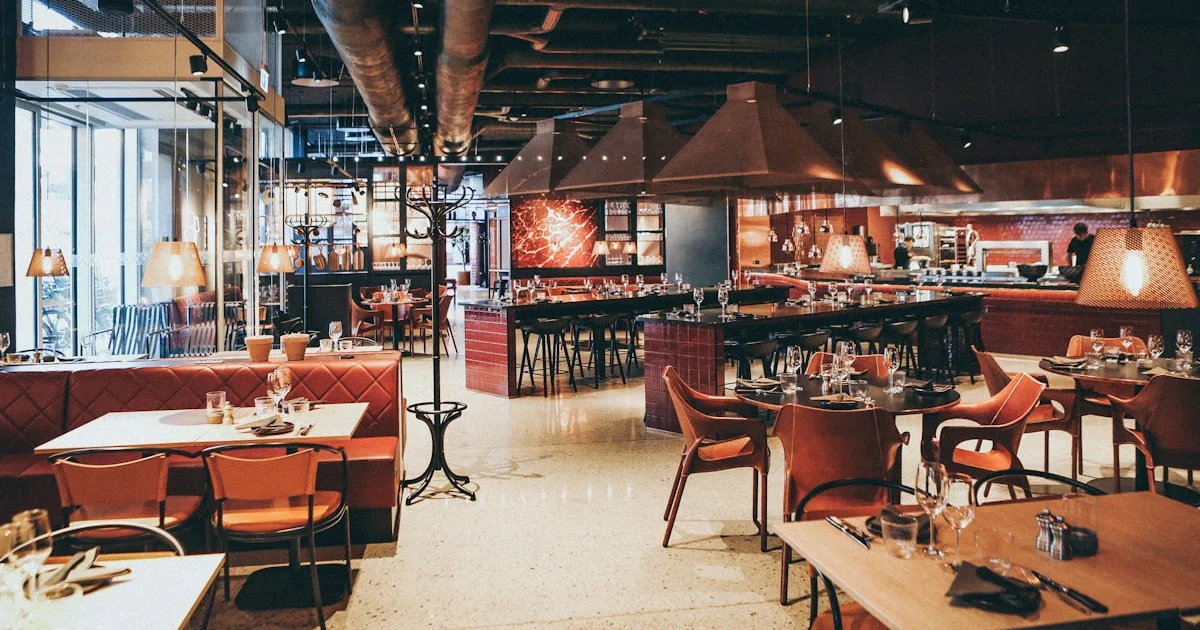
The UK restaurant industry runs on razor-thin margins. Labour costs keep climbing, food waste eats into profits, and customers expect faster service than ever. Meanwhile, the global AI-in-restaurants market is projected to hit $67.73 billion by 2030, growing at a staggering 38.3% annually. The question isn't whether AI will transform hospitality. It's whether your restaurant will be leading the charge or scrambling to catch up.
The good news: 85% of UK restaurant leaders are already planning tech investment, and the tools range from completely free to surprisingly affordable. This guide covers what's actually working right now, what's still hype, and how to get started without blowing your budget.
What's Actually Happening with AI in Restaurants Right Now
Forget the sci-fi nonsense. AI in restaurants isn't about replacing your head chef with a robot (yet). It's about handling the tedious, time-consuming stuff that drains your margins: taking phone orders, managing inventory, predicting demand, reducing waste, and answering the same "are you open on bank holidays?" question for the hundredth time.
The numbers are genuinely impressive. Restaurants using AI are reporting an average 22% revenue increase and 17% reduction in labour costs. And 86% of restaurant operators now say they're comfortable with AI technology. This isn't early-adopter territory anymore. It's mainstream.
Let's break it down by where AI is making the biggest difference.
Drive-Through and Phone Ordering: The Voice AI Revolution
If you run a drive-through or takeaway, this is where AI is making the most immediate impact. Voice AI systems now achieve 97% order accuracy and process orders 35% faster than human staff. That's fewer wrong orders, shorter queues, and happier customers.
Wendy's FreshAI is expanding to 500-600 locations after proving that AI voice ordering works at scale. Taco Bell has rolled out Omilia voice AI across 650+ stores. Even McDonald's is partnering with Google Cloud on voice AI after their initial IBM pilot ran into accuracy problems (more on that in the challenges section).
For smaller UK restaurants, the economics are compelling. Vox AI reports a 17x ROI for restaurant clients. AI phone assistants are generating three to eighteen thousand pounds in extra revenue per month per location, simply by answering calls that would otherwise go to voicemail. Costs? Typically between nothing and 500 pounds a month.
Tools Worth Looking At
SoundHound powers over 10,000 restaurant locations and integrates with major POS systems like Toast and Square. Loman AI and Slang AI (from around 99-500 pounds per month) are designed specifically for restaurants that want AI to answer phones, take orders, and handle reservations without hiring extra staff.
Kitchen Automation: Robots That Actually Work
Kitchen robotics is moving from novelty to necessity. The standout example is Sweetgreen's Infinite Kitchen, which can handle 500 orders per hour with one-third of the usual staff, and has reduced employee turnover by 45%. When your biggest operational headache is finding and keeping kitchen staff, those numbers matter.
Flippy, the robotic fry cook by Miso Robotics, is now operating in White Castle and Jack in the Box locations, handling 100 baskets per hour. Chipotle has deployed Autocado (which preps avocados) and an Augmented Makeline for faster bowl and salad assembly. Chick-fil-A claims its kitchen robotics save 10,000 labour hours per day across their production facilities.
Now, let's be honest. Full kitchen robots are expensive and mainly relevant to large chains right now. But the principle trickles down. Smaller operators can benefit from AI-powered kitchen display systems that optimise order sequencing, predict prep times, and reduce bottlenecks during the Friday night rush. These are built into modern POS platforms and cost a fraction of a robot.
Cutting Food Waste (and Saving Serious Money)
Food waste is one of the biggest profit killers in hospitality, and it's where AI delivers some of the most impressive returns. McKinsey research shows AI can reduce inventory errors by 20-50%, and the ROI on waste management AI averages 14x.
The UK poster child here is Winnow, founded in London. Their AI-powered food waste monitoring system uses cameras and scales to automatically track what gets binned, identify patterns, and suggest changes. Winnow's clients are collectively saving over $100 million annually. IKEA UK cut their food waste by 50% across 23 stores using Winnow. Savings for individual restaurants range from 5,000 to 250,000+ pounds per year depending on size.
For smaller operations, even basic AI demand forecasting can make a real difference. Predicting how many covers you'll do on a wet Tuesday versus a sunny bank holiday weekend means ordering smarter, prepping less, and binning less. Several POS platforms now include this as a built-in feature.
Customer Service: Chatbots, Bookings, and Reviews
60% of restaurants are now using chatbots for daily customer interactions, and it's not hard to see why. AI chatbots handle reservations, answer menu questions, process simple complaints, and capture feedback around the clock. Your staff can focus on the customers actually sitting in front of them.
FoodiBot is purpose-built for restaurants and handles ordering, bookings, and FAQs across calls, WhatsApp, and your website. ManyChat and BotPenguin offer broader chatbot platforms that work well for hospitality, with free tiers available and paid plans from around 15 pounds per month. These integrate with Facebook Messenger, Instagram, WhatsApp, and your website.
AI can also handle review management. Tools like ChatGPT can draft professional, personalised responses to Google and TripAdvisor reviews in seconds. Responding promptly to every review, positive or negative, is one of the simplest ways to boost your online reputation and climb local search rankings.
POS Systems with AI Built In
If you're using a modern point-of-sale system, you may already have AI features you're not using. Toast, Square, and Lightspeed all now include AI-powered analytics, demand forecasting, and menu optimisation tools.
These systems can identify your most profitable dishes, suggest pricing adjustments, flag slow-moving items, and predict staffing needs based on historical patterns. The data is already flowing through your POS every day. AI just helps you actually use it.
For UK restaurants considering an upgrade, look for POS systems that offer built-in AI features rather than bolting on separate tools. The integration is smoother, the data flows better, and you avoid paying for multiple subscriptions.
Free AI Tools Every Restaurant Can Use Today
You don't need a budget to start with AI. ChatGPT and Claude (both free) can help with menu planning, writing dish descriptions, creating social media content, drafting staff training materials, responding to reviews, and generating marketing emails. Just describe what you need in plain English.
Try these prompts today: "Write a week of Instagram posts for a family-run Italian restaurant in Manchester." Or: "Create a specials menu using these leftover ingredients." Or: "Write a professional reply to this 2-star Google review." Or: "Suggest five ways to reduce food waste in a busy kitchen."
Canva (free tier) turns your food photos into professional social media graphics and menu designs. Buffer (free tier) schedules posts across platforms at optimal times. Combined with AI-generated copy, you can run a decent social media presence in 20 minutes a week.
The Challenges Nobody Talks About
We'd be doing you a disservice if we only talked about the success stories. AI in restaurants isn't all smooth sailing.
McDonald's IBM pilot failed. Their initial drive-through voice AI made enough errors, including infamously adding bacon to ice cream orders, that they scrapped the partnership and started fresh with Google Cloud. Taco Bell's system got pranked when someone ordered 18,000 cups of water through the voice AI. These aren't reasons to avoid the technology, but they're reminders that implementation matters enormously.
Only 43% of restaurants have a proper AI strategy. Most are experimenting without a plan, which leads to wasted money and staff frustration. And there are legitimate concerns about job displacement. Research suggests up to 40% of food service jobs could eventually be automated, though 76% of operators believe chefs and cooks would be hard to replace. The responsible approach is to use AI to handle shortage areas and redeploy staff to higher-value, guest-facing roles.
Cost can be a barrier for small operators. Kitchen robots cost six figures. Even voice AI systems have monthly fees. The trick is starting with tools that have free tiers or low costs and clear, measurable ROI before investing in bigger systems.
For UK restaurants specifically, data protection matters. UK GDPR applies to any customer data you collect through AI systems. The ICO is currently developing a statutory code of practice on AI and automated decision-making. The FSA has confirmed no new food safety regulation is needed for AI, provided human accountability remains central. But you still need clear privacy policies and responsible data handling for any AI tools you deploy.
How to Get Started This Week
Today (Free, 30 Minutes)
Download ChatGPT on your phone. Ask it to write your next social media post, draft a response to a Google review, or plan tomorrow's specials based on what needs using up.
This Week (Free to Low Cost)
Set up a simple chatbot on your website or Facebook page. ManyChat has a free tier and takes under an hour. Start answering those repetitive "what time do you close?" and "do you cater for allergies?" messages automatically.
This Month (Budget Dependent)
Review your POS system's AI features. You might be surprised what's already included. If your current system doesn't offer demand forecasting or menu analytics, consider whether an upgrade would pay for itself. Look at Winnow or similar waste monitoring if food waste is a significant cost.
This Quarter (Strategic Investment)
If you're running a takeaway or drive-through, pilot a voice AI ordering system. Start with one location, measure the results, and scale if the numbers work. For multi-site operators, look at AI-powered scheduling and inventory forecasting to optimise across locations.
The restaurant industry is moving fast. 82% of operators are increasing their AI investment in 2026. You don't need to do everything at once, but doing nothing is increasingly risky. Start small, measure results, and build from there.
FAQ: AI for Restaurants
Q: Will AI replace restaurant staff?
Not entirely. AI handles repetitive tasks like phone orders, inventory tracking, and customer queries. Cooking, hospitality, and the human experience of dining out still need people. The smartest restaurants use AI to fill staff shortages and free up their team for guest-facing work rather than replacing roles wholesale.
Q: How much does restaurant AI cost?
It ranges enormously. ChatGPT is free. Chatbots start from nothing. Voice AI runs 99 to 500 pounds per month. Waste monitoring systems like Winnow save 5,000+ pounds per year. Kitchen robots are six-figure investments mainly suited to large chains. Start with the free tools and scale up based on ROI.
Q: Is AI accurate enough for taking food orders?
Modern voice AI achieves 97% accuracy, which is comparable to human staff during a busy service. However, early implementations like McDonald's IBM pilot showed that accuracy varies hugely by system and context. Choose a proven, restaurant-specific platform and expect a tuning period of a few weeks.
Q: Do I need to worry about data protection with AI tools?
Yes. UK GDPR applies to any customer data collected through AI chatbots, ordering systems, or loyalty programmes. Make sure you have clear privacy policies, only collect data you actually need, and use tools that store data securely. The ICO is currently developing specific AI guidance for UK businesses.
Q: What's the quickest win for a small restaurant?
A chatbot for your website or social media. It handles bookings and FAQs 24/7, captures leads you'd otherwise miss, and costs nothing with free-tier tools like ManyChat or Tidio. Most restaurants see results within the first week.
The Bottom Line
The AI-in-restaurants market is growing at 38.3% per year and the tools are more accessible than ever. You don't need a chain restaurant budget to benefit. Free tools like ChatGPT handle marketing and menu planning. Affordable chatbots capture bookings around the clock. And if you're running a takeaway, voice AI can pay for itself within weeks.
Northern Codes helps restaurants and hospitality businesses find the right AI tools and implement them properly. Whether you're a single-site independent or a growing chain, we can help you cut waste, speed up service, and free your team to focus on what matters: the food and the people eating it. Get in touch for a free chat or explore our AI automation services to see what's possible. You can also request a free quote tailored to your business.
Sources:
Winnow - AI Food Waste Solutions | Deloitte - How AI is Revolutionising Restaurants | QSR Web - Why 2026 is the Year of the AI-Driven Restaurant | McKinsey - AI in Food Service Operations | ICO - AI and Data Protection Guidance | Mordor Intelligence - AI in Food and Beverages Market | NVIDIA - Yum! Brands AI Partnership | Restaurant Dive - Wendys Drive-Thru AI Expansion